Between the added vehicle weight, extra cargo and passenger capacity, and the higher ride height that shifts your center of gravity, your brakes work harder in an SUV than they do in a sedan. That means more heat, more friction, and more wear on your pads and rotors over time, especially if you’re hauling gear, towing, or driving in stop-and-go traffic.
The good news is that staying ahead of brake wear doesn’t have to be complicated. This quick guide walks you through the warning signs to watch for, what brake service typically costs, what the repair process looks like, and when it’s time to schedule a visit to our Chevrolet service center. Whether you’re driving a Trailblazer, Equinox, Traverse, or Tahoe, being proactive can save you money and keep your SUV stopping safely.
Not sure if that noise or feeling is something to worry about? Here are the most common warning signs that it’s time to have your Chevy’s brakes inspected.
Squealing and unusual noises are the most common symptoms of worn brake pads, and it’s usually the easiest to catch. Most Chevy brake pads have a small steel wear indicator built right into the pad. Once the friction material wears down to a certain point, that indicator makes contact with the rotor and produces a loud, high-pitched squeal or squeak when you brake. It’s a clear sign that your brakes need some attention.
Feeling a shudder in the brake pedal or steering wheel when you slow down usually means your rotors are warped. When a rotor’s surface becomes uneven, the brake pads can no longer sit flush against it, so they bounce slightly against the high and low spots as the rotor spins. This results in a vibration or pulsation you can feel through the pedal or wheel.
As brake pads wear down, it can take more pressure on the pedal to get the same stopping power. If your brake pedal feels softer than usual or you find yourself needing to press harder to slow down, it may be due to worn pads. This is less common in modern cars, but it can still happen and shouldn’t be ignored.
Many Chevy SUVs, particularly higher trim levels, have an electronic brake wear sensor. When your pads wear down past a safe threshold, this sensor triggers a warning light on your dashboard. This same light can also come on if your brake fluid is low, so it’s not always a major issue. Either way, it’s a signal worth having checked out.
Depending on your Chevy’s wheel design, you may be able to inspect your brake pads yourself. Look through the spokes of your wheel at the brake caliper. If the pad pressed against the rotor looks thinner than a quarter of an inch or so, it’s likely time for a replacement.
If it seems to take a little longer than usual to come to a complete stop, don’t brush it off. Increased stopping distance is often an early indicator of worn brake pads and should be taken care of before it becomes a bigger safety issue.
If your Chevy pulls left or right when you hit the brakes, it isn’t always due to the brake pads themselves. This can also point to a sticking brake caliper, suspension misalignment, uneven tire pressure, or a tire defect. Either way, a pull while braking is worth having a technician diagnose to pinpoint the exact cause.
The honest answer is that there’s no single mileage number that applies to every Chevy SUV. A Chevy Equinox driven mostly on the highway can go significantly longer between brake pad replacements than the same Equinox used for frequent stop-and-go city driving. If you’re someone who frequently rides the brakes in heavy traffic or makes abrupt stops, you can expect to replace your pads much sooner than a driver who spends most of their time cruising at steady highway speeds.
Weather also plays a role. In areas with heavy rain or wet seasons, braking efficiency naturally drops, and consistent exposure to moisture can cause rust and corrosion to build up on your brake rotors over time, causing them to wear faster.
Since driving style, terrain, and weather all play a role, the best approach is to combine regular inspections with attention to the warning signs covered earlier in this guide. As a general rule of thumb:
Think of these numbers as a starting point, not a hard deadline. Your driving habits and conditions will ultimately determine where you fall in that range, which is exactly why regular inspections matter more than sticking to a fixed schedule.
When you stop in for a Chevrolet service near you, our goal isn’t just to fix your brakes. We want you to understand exactly what we’re doing and why. You should leave the service center feeling confident in your vehicle’s most important safety feature, and in the work our technicians performed to keep it that way.
Here’s an example of what you can expect when you bring your Chevy Tahoe in for a brake pad service:
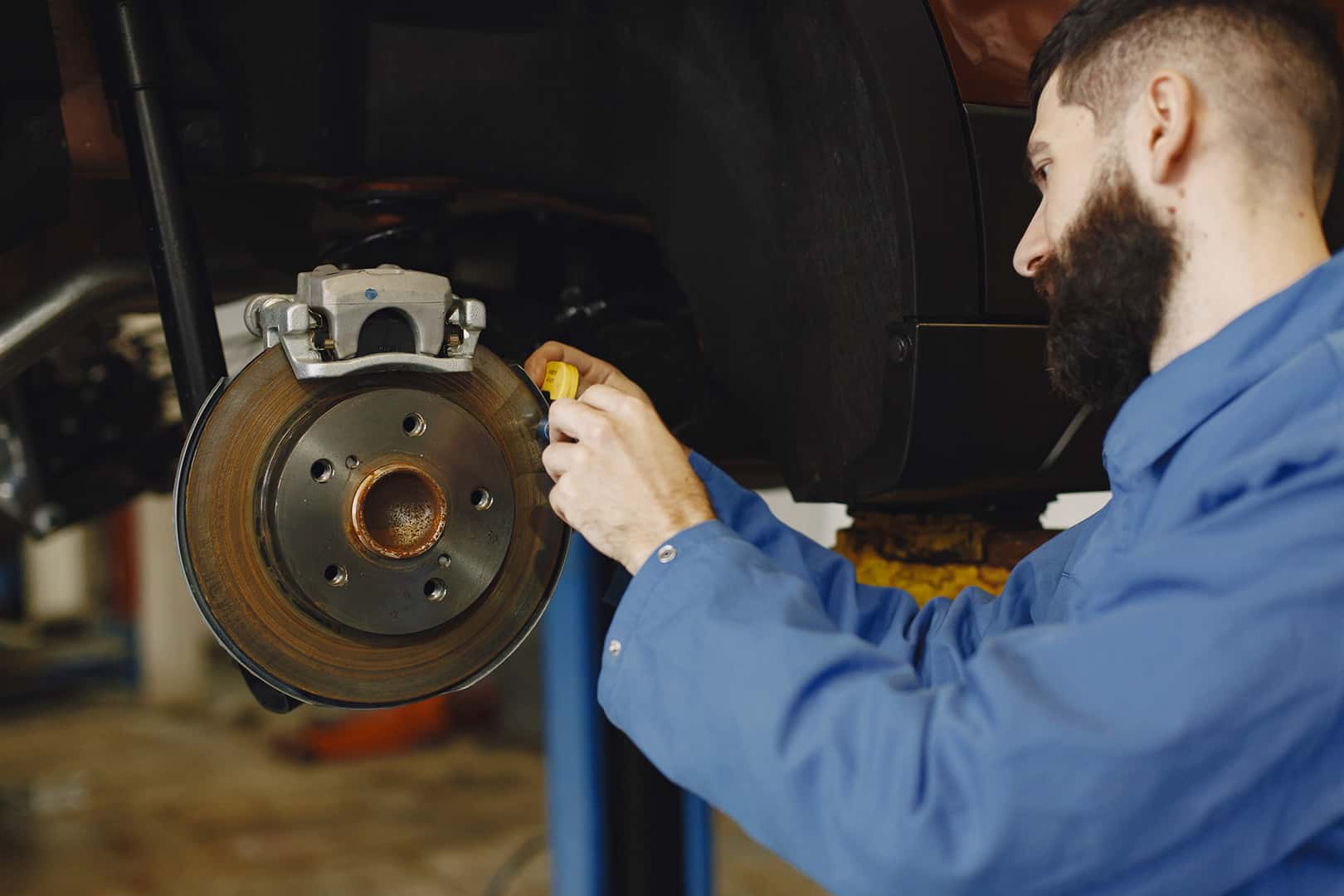
Remove the wheel and caliper. Our technician starts by removing the wheel to access the brake assembly, then removes the caliper to get a clear view of the pads and rotor.
Inspect and measure the rotors. Before touching the pads, we inspect the rotors for wear, scoring, and thickness variations. This tells us whether the rotors are still in good shape or need attention.
Resurface or replace rotors as needed. If the rotors show minor wear, they can often be resurfaced (machined smooth) rather than replaced. If they’re too thin or damaged, we recommend replacing them to make sure your new pads have a proper surface to grip.
Install new brake pads. Brake pads are always replaced in pairs to prevent uneven braking or pulling. This keeps braking force balanced across the axle.
Reassemble and torque the wheel to spec. Once the new pads are in place, we reassemble the caliper and wheel, torquing everything to the manufacturer’s exact specifications for a safe, secure fit.
Road test. Before handing your keys back, we take your Tahoe for a road test to confirm the brakes are functioning properly and that everything feels smooth and safe under real driving conditions.
Once you’re back on the road, give your new pads a little time to settle in. We recommend braking gently for the first 40 to 50 miles after a brake pad replacement. This break-in period allows the pads to adjust properly to the rotors, which helps prevent squeaking and ensures you get the smoothest, most reliable performance out of your new brakes.
Brake pad replacement costs vary depending on a few factors, but as a general guideline, you can expect to pay between $100 and $300 per axle, including both parts and labor.
Vehicle size and weight. Larger, heavier SUVs tend to run on the higher end of that range, or even above it. Full-size models like the Chevy Tahoe or Suburban can push brake pad replacement costs upward of $300 per axle, since these vehicles require larger, more heavy-duty components.
Pad material. The type of brake pad you choose plays a big role in both cost and performance. Organic, semi-metallic, and ceramic pads each offer different levels of performance, noise, dust, and longevity and are priced accordingly. Your service advisor can help you weigh the trade-offs to find the right fit for your driving needs and budget.
Your specific Chevy model. In addition to size and weight, your model determines what type and size of pads your vehicle requires. A set built for a compact Trax will differ from what’s needed on a Tahoe or Suburban, and pricing reflects those differences.
Don’t let cost keep you from staying safe behind the wheel. Be sure to check out our ongoing service and parts specials for ways to save on your next brake service appointment. Staying on top of brake maintenance is always more affordable than dealing with the consequences of putting it off.
Chevy SUVs typically use one of three pad materials, each with its own strengths depending on how and where you drive.
Organic Brake Pads – Made from softer materials, organic pads run quiet and are gentle on your rotors, making them a budget-friendly alternative to higher-end ceramic pads.
Semi-Metallic Brake Pads – This is the most widely used pad type on the road. Semi-metallic pads strike a solid balance between durability and everyday braking performance.
Ceramic Brake Pads – Built for quiet, smooth stops, ceramic pads hold up well under pressure and typically offer the longest lifespan of the three options.
Best for Daily Drivers – While ceramic pads tend to be more expensive, their durability and smooth performance make them a great fit for daily commuters and family SUVs that spend a lot of time on the road.
If you notice a squealing or grinding sound when you brake, a soft brake pedal, longer stopping distances, or a vibration when you brake, your SUV likely needs new brakes. We recommend bringing it to a Chevy service center as soon as possible.
Since brake life depends on several factors, there is no hard and fast rule for replacing brake pads. In general, stop-and-go driving means you’ll need to replace them more often, while highway driving means they’ll last longer. We recommend having them inspected every 10,000-20,000 miles to catch wear early.
Chevy brake service cost can vary based on your model, the pad material, and the size of your vehicle. Expect to pay around $100-$300 per axle, with larger SUVs being on the higher end of the spectrum.
A grinding noise indicates metal-on-metal contact, and your stopping power is seriously reduced. It’s not advised to drive if your brakes are grinding.
No, it’s not necessary to replace your rotors every time you replace your brake pads. Typically, most drivers go through two sets of pads for every one set of rotors.
When your Chevy SUV needs brake service, choose Team Chevrolet of Salisbury! Our certified technicians use genuine GM Parts and ACDelco parts so you can rest assured that you’re getting the best fit for your vehicle. Schedule your service appointment today or give us a call!